Fitness franchises: boutique studios, class formats and memberships
From small-group class studios to health programmes: which fitness concepts are available as franchises, how they make money and what partners should bring with them.
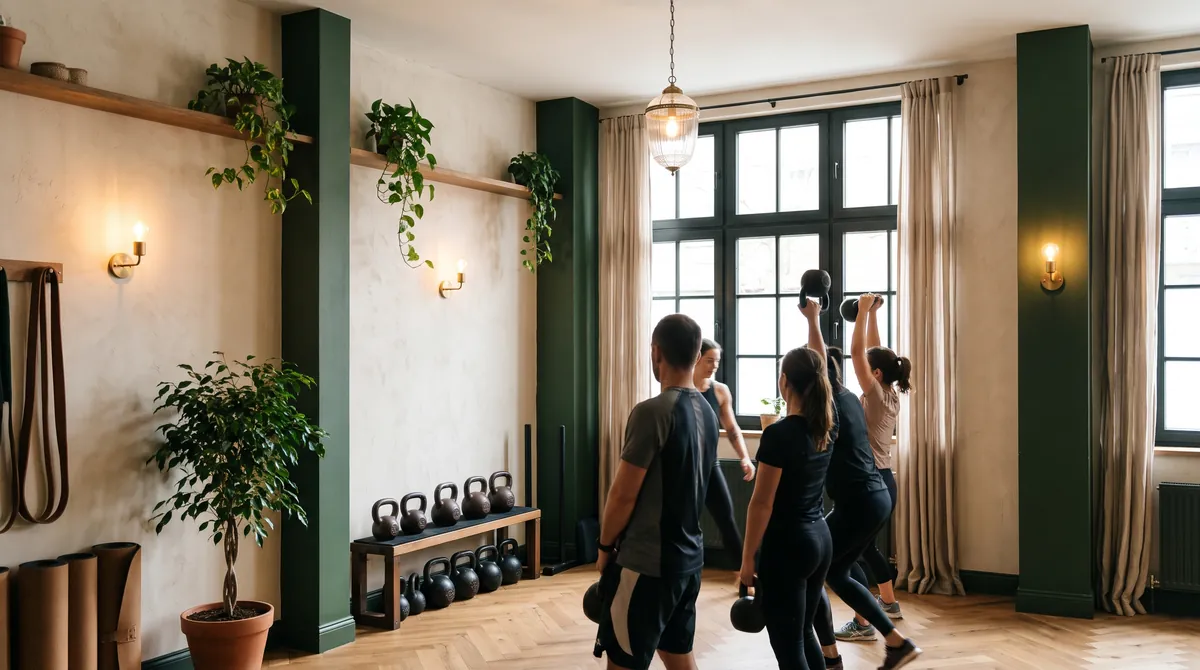

It is just after seven, the first class of the day is over, and a few members are still standing together in the entrance with their water bottles. Anyone who runs a gym knows this moment: the workout is done, but the sense of community keeps people there a little longer. This is precisely the core of many franchise concepts in the sector. They sell not just equipment and class times but an environment in which people stick with it. If you are thinking about becoming a franchisee, you should therefore first understand which model suits which target group and what really decides success day to day.
Four models, each with its own business logic
Fitness is not a single market. Franchise systems differ mainly in how many people train at the same time, how closely they are supervised and what they pay for. Four basic models can be clearly distinguished:
- Boutique studios: small, specialised spaces with small-group classes, such as circuit training, indoor cycling (training on stationary bikes), functional training, Pilates and reformer Pilates (Pilates on a machine with a moving carriage and springs) or yoga. Here, the class timetable is the actual product.
- Gyms with equipment training: larger spaces, long opening hours and members who mostly train on their own. Location, equipment and reliable organisation are what count.
- Personal training concepts (one-to-one training with individual supervision): fixed appointments, a small space and high demands on the trainers’ qualifications and personality.
- Health programmes: classes and programmes for the back, mobility and prevention, often for people who have done little sport so far and value plenty of advice.
The models can be combined, but every system has a focus. That determines the size of the space, the number of trainers and the way new members are won. A class studio depends on full sessions, a gym on many members with flexible training times, a health concept on trust and recommendations. Before you compare figures, you should therefore know which kind of studio you would actually enjoy running.
How a studio makes money
The most important source of income is almost always memberships with monthly fees. They give the business predictable revenue and give members a reason to come regularly. There are other sources too, which carry different weight depending on the concept:
| Revenue source | What lies behind it |
|---|---|
| Memberships | Monthly fees with a fixed initial term, the basis of all planning |
| Class packs | Bundles of sessions for people who do not want a long-term commitment |
| Trial sessions | The way in for prospective members, combined with a consultation |
| Corporate fitness | Agreements with companies whose employees train at the studio |
| Add-on sales | Drinks, accessories, nutritional advice or one-to-one sessions with trainers |
The weighting depends on the concept. Reliable benchmark figures belong in the franchisor’s documents.
Corporate fitness deserves particular attention. Nearby companies are looking for offers for their staff, and a studio that maintains such agreements gains several members at a stroke, who often come at similar times. That helps utilisation but requires sales work: talks with HR managers, a clear offer and reliable support so that the agreement lasts beyond the first year.
Keeping an eye on the cost blocks
On the cost side, the same items recur in every model, only in different sizes. Rent depends on floor space and location, and a gym needs considerably more room than a class studio. Equipment ranges from a few pieces of class kit to complete training floors, plus changing rooms, showers and ventilation. In class concepts, the team of trainers is often the largest ongoing cost, because every session needs a qualified person. Then there is the software for bookings and membership management, local marketing and the fees paid to the franchisor. Our articles on franchise fees and on equity explain in more detail how the entry fee and ongoing fees are made up and how to plan your total capital requirement.
What decides success
The best equipment is of little use if the studio is in the wrong place. The location has to suit the target group: a class studio for working people belongs where they live or work, a health programme where older people can reach it easily. After that, these points matter most:
- Class utilisation: a class that is regularly well attended pays for itself. A half-empty session costs trainer hours and dampens the mood.
- Member retention: winning new members costs time and money. If you support them well in the first few weeks, you keep them longer.
- Quality of the trainers: members come because of the people who coach them. Training and appreciation within the team pay off.
- Sense of community: shared goals, small challenges and fixed rituals turn a class into a group whose members look forward to seeing each other.
A gym sells training, but members stay because of the people they meet there.
Contracts with members: what applies in Germany
Membership contracts are consumer contracts, and in Germany the legislator has tightened the rules here. Under the German Act for Fair Consumer Contracts, the following applies to contracts concluded from 1 March 2022: once the initial term has expired, they can only be extended for an indefinite period, and members may then cancel with a maximum of one month’s notice (Section 309 No. 9 of the German Civil Code, BGB). If you let members sign up online, you must also offer a cancellation button that allows them to cancel just as easily (Section 312k BGB).
For your planning, this means a studio cannot rely on long automatic renewals. Members stay because they enjoy coming. That favours concepts built on support and community. Make sure the system’s contract templates are up to date, and if in doubt have them checked by a specialist lawyer.
Hygiene and insurance are also part of the essentials. Equipment, mats, changing rooms and showers need fixed cleaning schedules that the team knows and follows. Public liability insurance covers damage that members may suffer at the studio. A conversation with an insurance specialist will clarify which other policies make sense. Many systems set standards and checklists for this.
Prevention as a second pillar
Health-oriented classes open the studio to people who have little time for conventional fitness training. Classes for the back, posture or mobility often appeal to an older or less sporty target group that values calm instruction. An extra incentive: in Germany, prevention courses can be subsidised by the statutory health insurance funds (Krankenkassen) if they are certified. For this, the course content and the instructor’s qualifications have to meet certain requirements. Ask the head office whether the system offers certified course concepts and who handles the certification. For participants, the subsidy is a good argument; for the studio, it is a route to new target groups.
Who is well suited to a fitness franchise
Enthusiasm for sport alone is not enough. Franchise systems in this sector often look for sporty entrepreneurs with experience in sales and leadership. The reason is simple: as a franchisee, you sell memberships, lead a team of trainers, talk to companies about corporate fitness and keep an eye on the figures. Teaching classes yourself is more of a sideline than the main job. If you enjoy working with people, take on responsibility and can be present early in the morning or in the evening, you are well placed. Our article on a day as a franchisee in a boutique fitness studio describes what a typical working day looks like.
Mallorca and the Costa del Sol: residents and holidaymakers
In Spanish regions with a large international community, a studio has two target groups. Residents train all year round and look for regular classes, ideally in their own language. Holidaymakers come for a few weeks and ask for class packs without a long commitment. Seasonal class programmes combine both: outdoor training in the mild months, programmes before the summer, short packs for visitors. If you set up a business there, observe the Spanish rules on trading and contracts and get support from local experts. Our article on running a business on Mallorca and the Costa del Sol describes the basics.
Frequently asked questions
Does a fitness franchisee have to be a trainer?
As a rule, no. As a franchisee you run the business, win members and lead the team. Having your own trainer qualification does no harm, though, because it helps you judge the quality of the classes.
What applies when the initial term of a membership contract ends?
In Germany, contracts concluded from 1 March 2022 can only be extended for an indefinite period, and the member may cancel with no more than one month’s notice (Section 309 No. 9 BGB). If the contract is concluded online, a cancellation button is required (Section 312k BGB).
Is corporate fitness worthwhile for a small studio?
Often, yes, because agreements with companies bring in several members at once. But they require sales work and good support for the employees. Ask the head office whether templates and benchmark figures are available.
What role do health insurers play?
In Germany, certified prevention courses can be subsidised by the statutory health insurance funds. That makes health classes more attractive to participants. Whether a system offers such course concepts is something to clarify in your talks with the head office.
This article is for general information and is not legal, tax or financial advice. Laws and funding programmes can change; discuss your own situation with a specialist lawyer, tax adviser or your bank.
Read on in our network
- GevitryHealth and prevention
Background on health, exercise and prevention in everyday life.
- trevisiaSuccess, money and freedom
Articles on success, money and entrepreneurial freedom.